

What Is The Type Of Makeup On The Atrians That Makes Those Markings
This article provides details of the rainbow of Pomeranian colors. If you lot have any questions about the different colors of Pomeranians, this article will answer them all.
Information includes pictures of all the 25 Pomeranian puppy colors, details of Pomeranian all colors, and a Pomeranian colors chart.
Pomeranians come up in various colors and patterns that would make anyone's head spin. In this article, I take y'all into all the different hues a Poms can possess.
Pomeranians come in an array of colors and patterns. From the solid-colored dogs like orangish, scarlet, or black to less well-known hues such every bit beaver and lavander.
It is of import to empathise the different Pomeranian colors. Equally an experienced breeder, I am often asked what colors do Pomeranians come in? Prospective owners will ask about toy Pom colors and what colors tin can Pomeranians exist?
To clarify 1 element mentioned throughout; "Points" refers to the Pom'south rims of the optics, lips, olfactory organ, and pads of the feet.
Every domestic dog is unique and beautiful in its own way, only what color should you become for your new pup? Pomeranian colors range from white to black, with a diversity of shades in between.
Some dogs are even born with two or iii dissimilar colorings on the same trunk! When deciding on a puppy, information technology may seem easy to choose which color Pom you want, only it's not always that simple.
The virtually popular colored Pomeranians are orange and orange sable because they're warm and inviting. If you desire a more unique colored dog than these, this article describes all the rarer Pomeranian colors in detail.
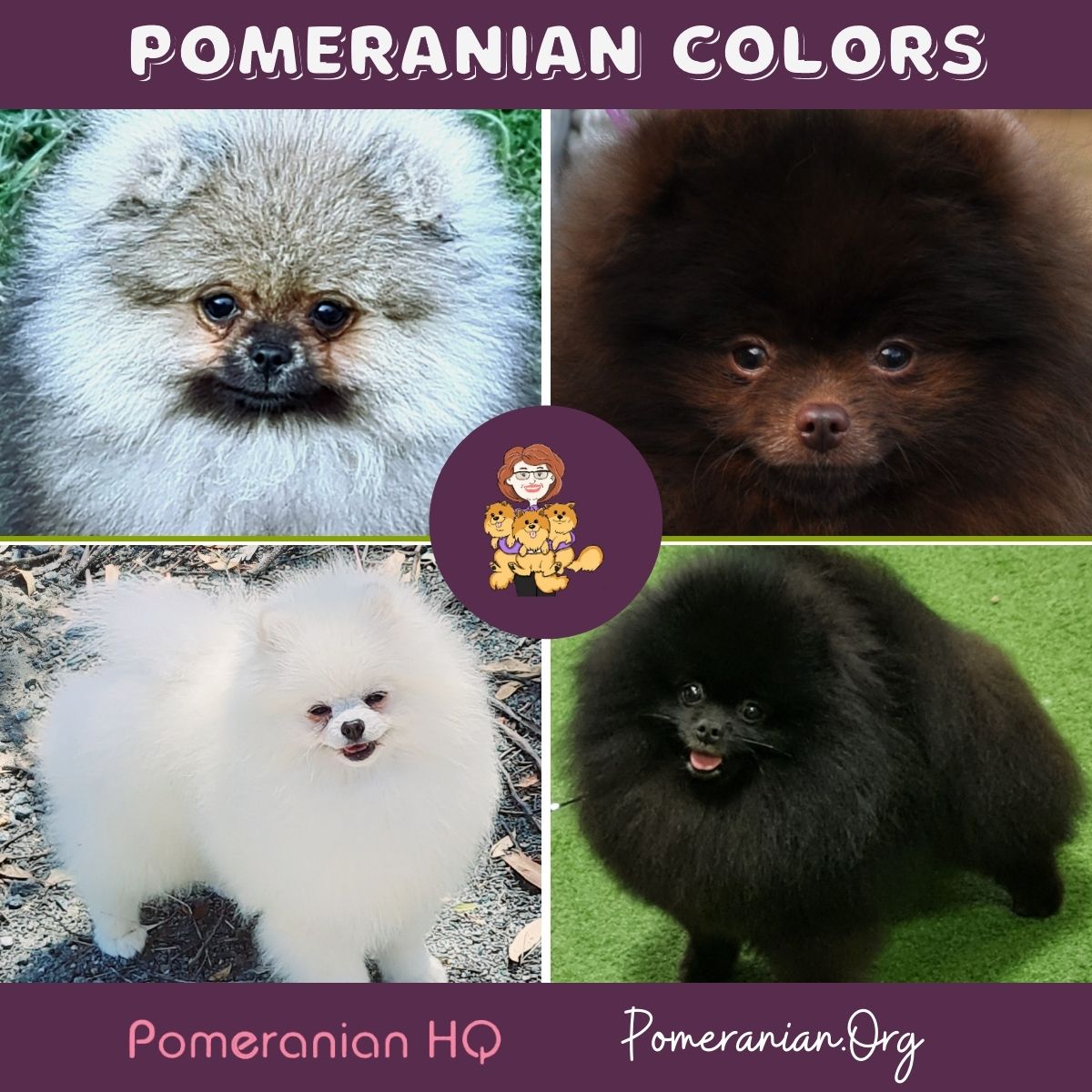
Popular Pomeranian Colors
With so many different color options to cull from, it can be hard to decide which is the best for your hirsuite friend. I have done some extensive enquiry and have compiled a list of all the colors you might run into in Pomeranian dogs.
Included are the results of my contempo Pomeranian coat colour enquiry.
I personally polled over 12,000 Pomeranian owners on the popularity of 25 recognized coat colors and patterns.
The results are published beneath in the Pomeranian colour chart:
Pomeranian Colour Nautical chart: 25 Recognized Glaze Colors
| Color | Popularity Rank | Color & Appearance |
| Orange | 1 | Orange Pomeranians may vary from an intense deep rust right through to a rich gold and a light dear blonde color. |
| Cream | 2 | Foam is an extremely pale orange. |
| Orange Sable | 3 | Orange sables must accept an orange trunk, lighter orange or even creamy undercoat with blackness tipping on guard hairs. |
| Blackness and Tan | iv | The black and tan pattern is a base black color with tan points. |
| Blackness. | v | Black Pomeranians possess a black undercoat and blackness guard hairs. |
| White. | 6 | A white Pomeranian should be a solid white with no lemon or cream shadings. |
| Wolf Sable. | 7 | Wolf Sables take a gray undercoat and the baby-sit hair is grey with black tipping. |
| Parti-Color. | 8 | The parti-color pattern is white with any other colour distributed in patches with a white blaze preferred on the head. |
| Chocolate. | nine | Chocolate Pomeranians are a rich brown. |
| Cream Sable. | ten | A cream sable is an extremely pale orange i.eastward. a cream with sable tipping. |
| Blue Merle. | 11 | A blackness base color combined with the merle design equals a bluish merle. |
| Red. | 12 | Ruddy Pomeranians are a deep rusty color. |
| Chocolate and Tan. | thirteen | The chocolate and tan pattern is a base chocolate color with tan points. |
| Cherry-red Sable. | fourteen | Are a deep rusty color with sable tippings to the glaze. |
| Tri-Colored. | 15 | Tri-color is a Parti-colour Pomeranian who also displays the tan pattern likewise as the parti-color blueprint. |
| Blue. | 16 | Blue Pomeranians are diluted blacks and must accept blueish points. |
| Blueish Sable. | 17 | Bluish Sables are bluish base coat with night blue guard hairs and over again catastrophe in blackness tipping to the guard hairs. |
| Blue and Tan. | eighteen | The blue and tan pattern is a base of operations blueish color with tan points. |
| Chocolate Merle. | nineteen | A chocolate base color combined with the merle pattern. |
| Beaver. | twenty | Beavers may range in colouring from a calorie-free biscuit to a darker brownish grey colour with a silvery blue cast to the coat. |
| Black and Brindle. | 21 | The base color is gold, red, or orange-brindled with strong black cross stripes. |
| Chocolate Sable. | 22 | Chocolate Sable Pomeranians have a chocolate base coat with darker chocolate guard hairs. |
| Lavander. | 23 | The lavander Pomeranian is a greyish colour with a pinkish, chocolate hue to the coat. |
| Bluish Brindle. | 24 | The base of operations color is gilt, red, or orange-brindled with strong blue cross stripes. |
| Merle and Tan. | 25 | Either blueish merle pattern with tan points or chocolate merle with tan points. |
Original Pomeranian Colors
The Pomeranians that we know today started with limited colors and were commonly white, black cream, or occasionally particolored.
Unlike their predecessors, Pomeranians are now available in a broad range of colors and patterns.
Detailed Information and Photos of Pomeranian Colors
Earlier we delve any further into the kaleidoscope of Pomeranians colors, let united states take a quick look at the official Pomeranian colors complete listing:
From the American Kennel Club Pomeranian Breed Standard:
Color
All colors, patterns, and variations thereof are allowed and must be judged on an equal basis.Patterns:
Brindle – Dark cross stripes on whatever solid color or allowed blueprint.
Parti – White base with any solid color or immune pattern. A white bonfire is preferred on the caput. Ticking is undesirable. Extreme Piebald: White with patches of color on head and base of operations of tail. Piebald: White with patches of color on caput, body, and base of tail. Irish: Color on the caput and body with white legs, chest and neckband.
Tan Points – Any solid colour or allowed pattern with markings sharply defined above each eye, inside the ears, cage, throat, forechest, all lower legs and feet, the underside of the tail and brim. The richer the tan the more than desirable. Tan markings should be readily visible.Classifications: The Open Classes at specialty shows may be divided past color as follows: Open Cerise, Orange, Cream, and Sable; Open up Black, Brown, and Blue; Open Whatsoever Other Color, Design, or Variation.
ROCS Form – (Cerise, Orange, Cream, Sable)
Sable includes: Reddish Sable, Orangish Sable, Foam Sable, Sable, Wolf SableBBB CLASS – (Black, Brown, Blue)
AOAC Class
AKC designated colors and markings.
Beaver, Brindle, Merle, Parti, Tan Points, and White
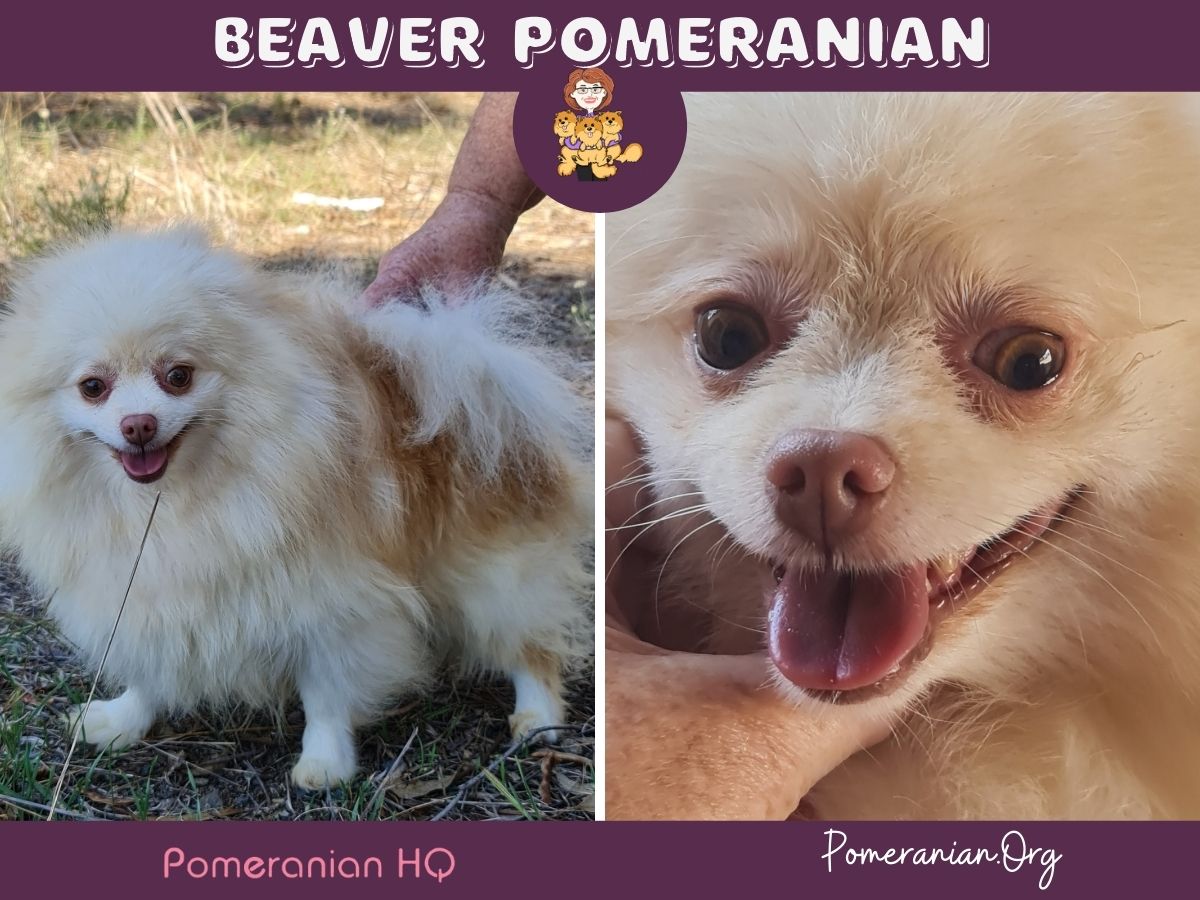
Beaver Pomeranians
A Beaver Pomeranian is a dilute brown. The beaver coat can range from orange-brown to beige foam. A beaver-colored Pomeranian is a taupe color ordinarily with a silverish bluish look to the coat tips.
In older versions of the Breed Standard, this color was called "biscuit." One stand-out feature is the pigment on the points and this must be self-colored ( i.east. brown color).
A beaver color Pomeranian usually will have hazel optics. If a dog has black points, dark eyes, or black in his coat, he's non a beaver or brown Pomeranian.
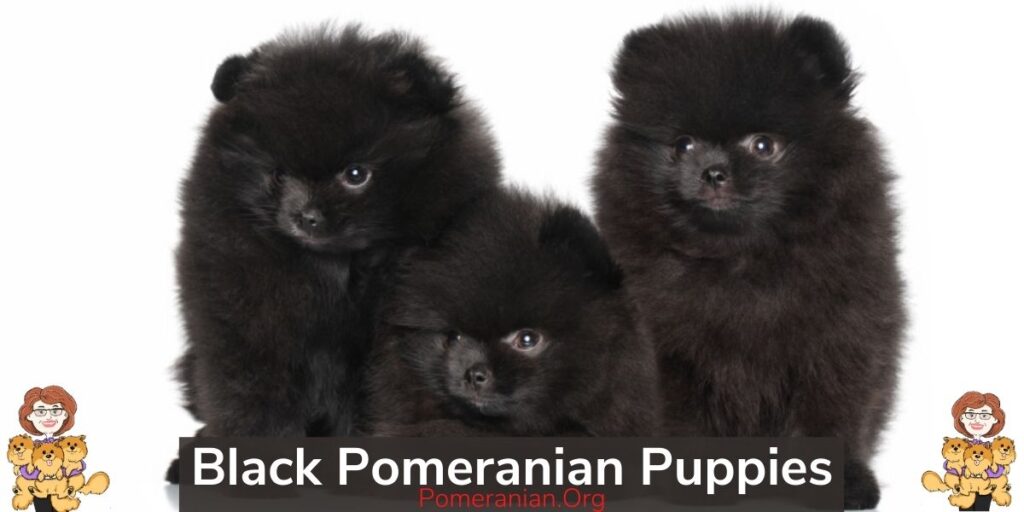
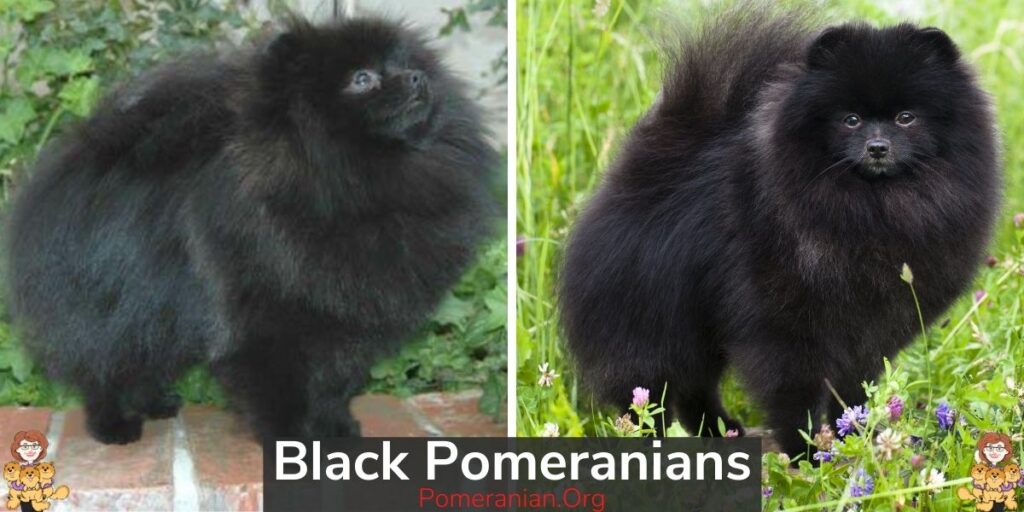
Black Pomeranian
The black Pomeranian possesses a blackness undercoat and black guard hairs. Points must be black. Blacks should be kept out of directly sunlight to avert a ruby-red tinge developing on the coat. Black Pomeranians oft volition have a few white hairs in the glaze. Typically on the chest or betwixt the pads.
Bluish Pomeranians
A Blue in the Pomeranian is a solid colour. A blue Pomeranian dog volition take light to nighttime grey guard hairs and a grey undercoat with greyish blue hair or fur.
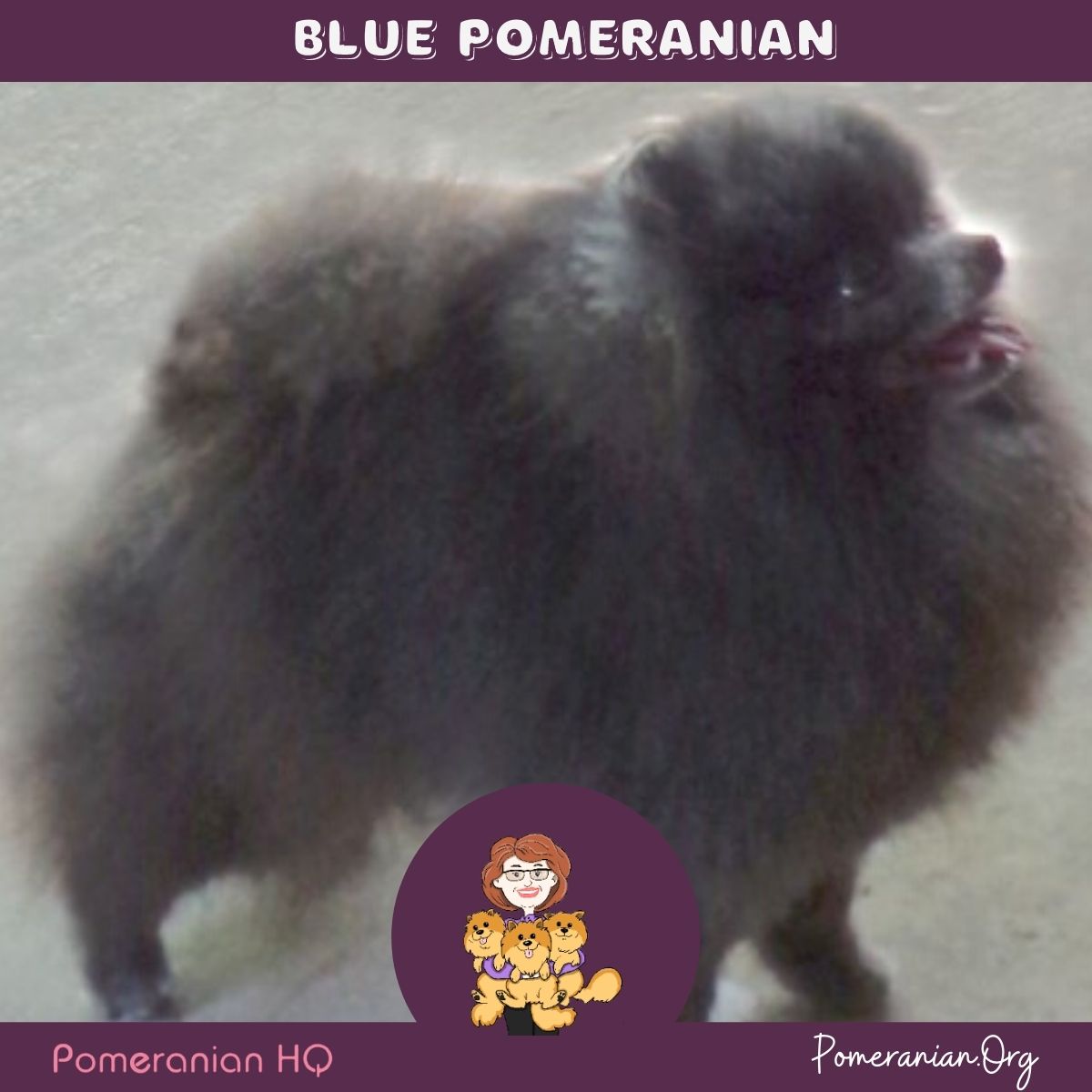
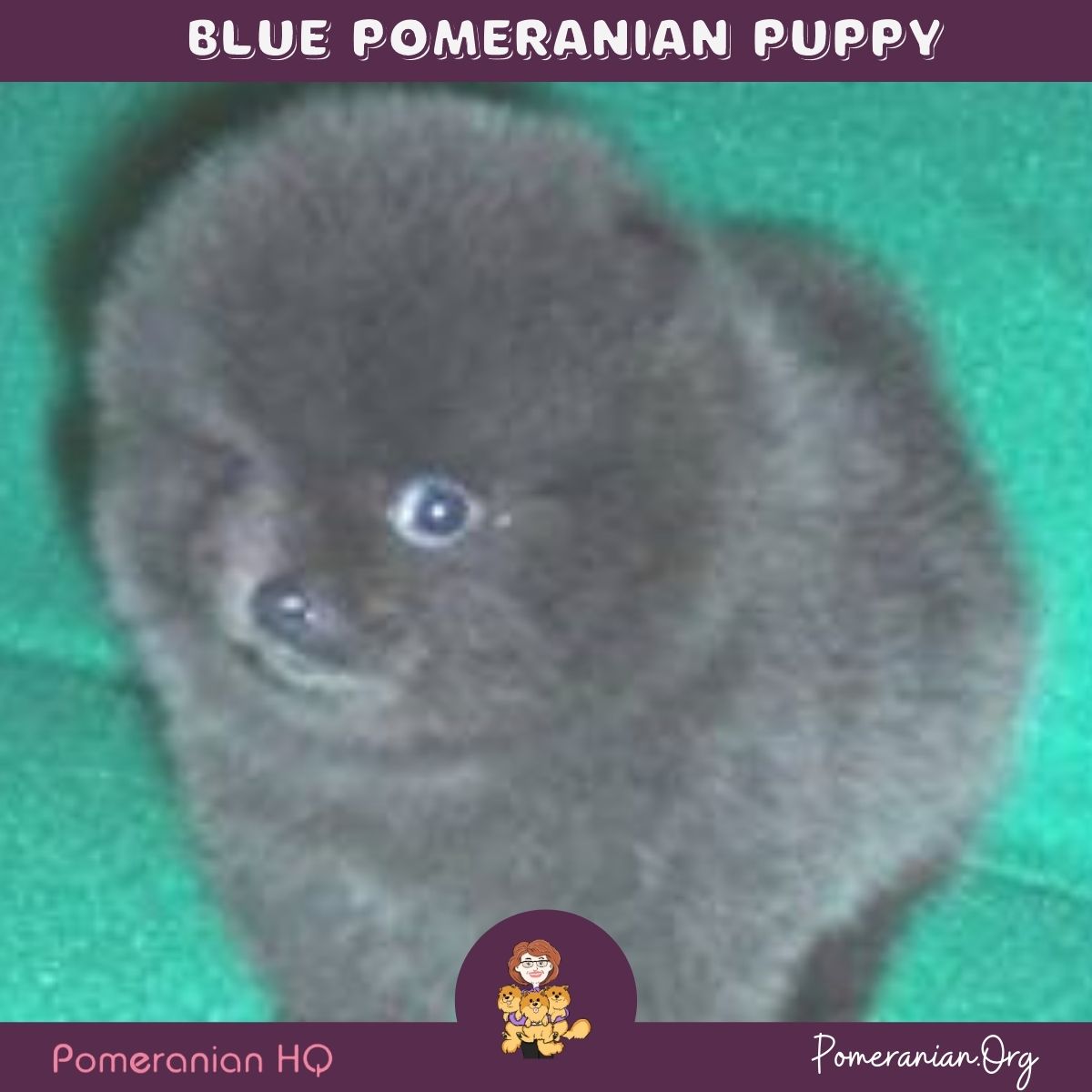
Some Blue Poms can be such a night shade of blue, that may look blackness in certain light. Compare these dogs to a genuine example of the colors. At nascence, Blue Pomeranian puppies are ordinarily a silver color.
Some newborn blues may even appear to be black. Blueish Pomeranian pups develop a silvery/gray undercoat and a darker slate grey outer coat as they mature. Pomeranian blueish is a diluted black and must have blueish points (Middle rims, nose, and pads ).
Bluish Poms are usually the result of convenance blacks together.
In the upshot, the coat is fabricated up of whatsoever kind of additional colors the dog is accordingly termed as a parti-color, or tri-color Pomeranian.
Dark-brown Pomeranian or Chocolate Pomeranian
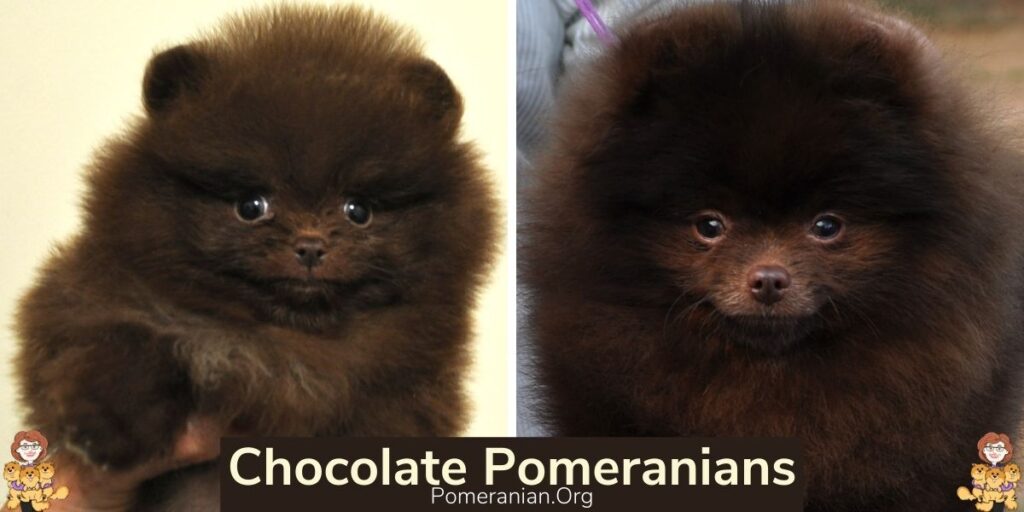
In Pomeranian domestic dog colors, brownish is a very diverse color and ranges from the light beaver shade to the darkest chocolate shade.
The chocolate Pomeranian color is rich and is fully cocky-colored. Brown is more of a milk chocolate color and may sometimes have lighter shades.
"Sunburning" or a reddening of the color can occur if the canis familiaris spends a lot of fourth dimension exterior.
A Pomeranian Dark-brown must accept brown points and will, similar the beaver oftentimes have hazel eyes.

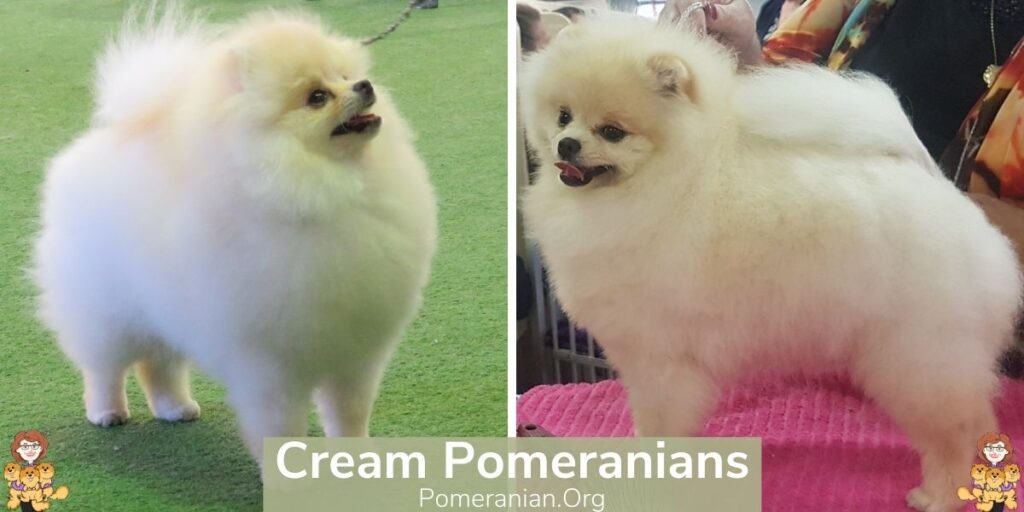
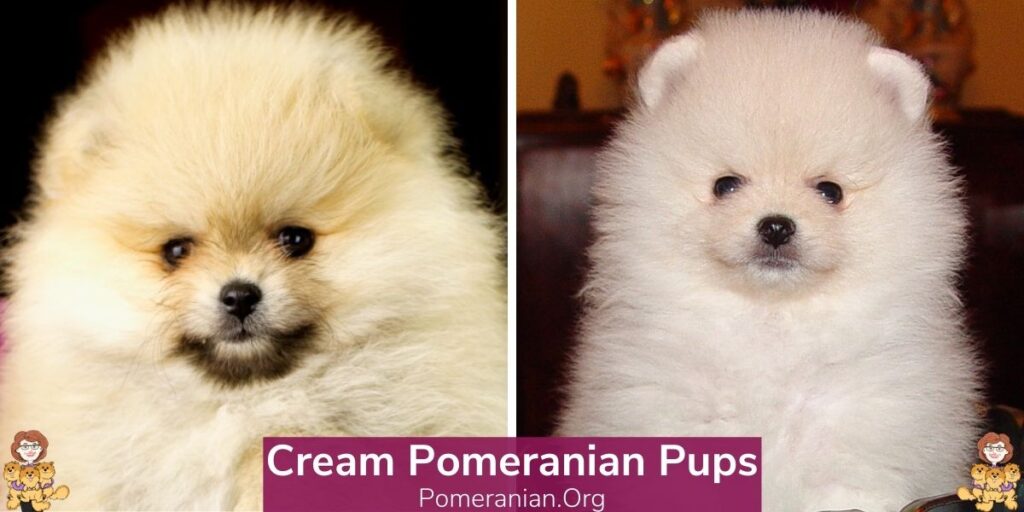
Cream Pomeranians
This Pomeranian color should be cocky-colored, with no white breechings. Considering of the harsher texture of the guard hairs, the topcoat may appear darker.
A cream Pomeranian must possess blackness centre rims, nose, lips, and pads. The whiskers are usually white or straw color.
A cream-colored Pomeranian puppy is typically white at birth. When clear cream puppies are built-in, they appear equally close to white as possible, and without the ability to have any black pigmentation on their hair, and if you look closely at the whiskers, you'll notice they take either a straw color or they're clear.
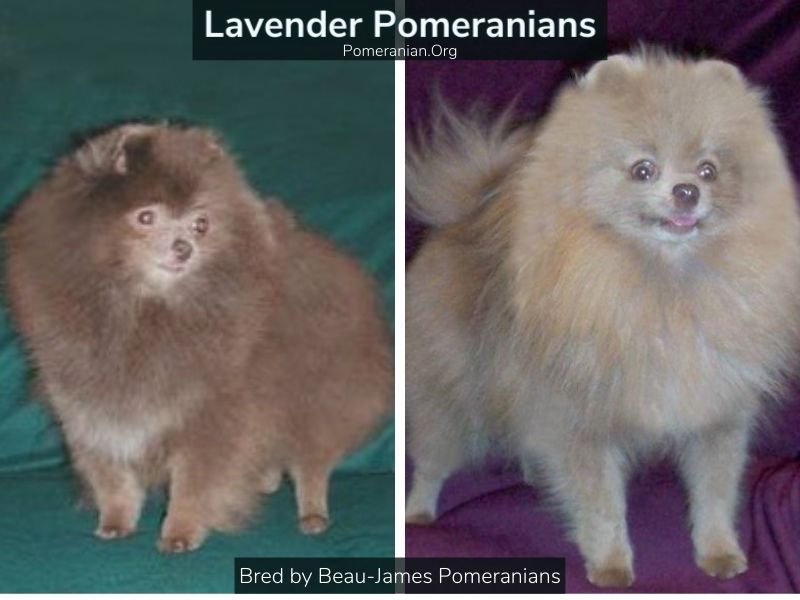
Lavender Pomeranian ( Dilute Chocolate- Isabella or Lavender)
An uncommon color is diluted chocolate. It's possible when both blue and brown are combined on one canis familiaris (bbdd). It has a similar appearance to that of the Weimaraner because it possesses a similar mixture of genes.
It'due south silvery-brown in color, often identified as Isabella or Lavender, depending on the breed. The paint is cocky-colored.
The Lavender Pomeranian colour is greyish with a pinkish, chocolate hue to the coat. The Pomeranian Lavender is regarded as a rare Pomeranian color.
If you think of a grey-colored Pom and add together a small-scale tinge of light regal, you'll accept this amazing colour.
Lavender Pomeranians are oftentimes the result of breeding ii dilutes, like a blue and a beaver together. Note this beautiful color is currently non AKC Pomeranian breed standard approved.
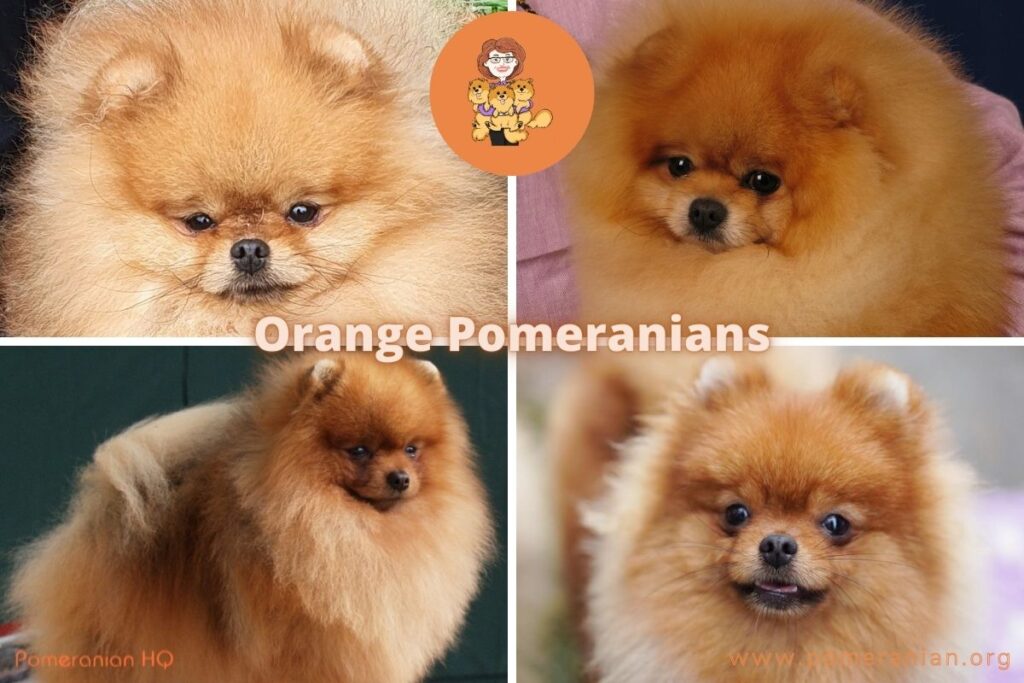
Orange Pomeranians
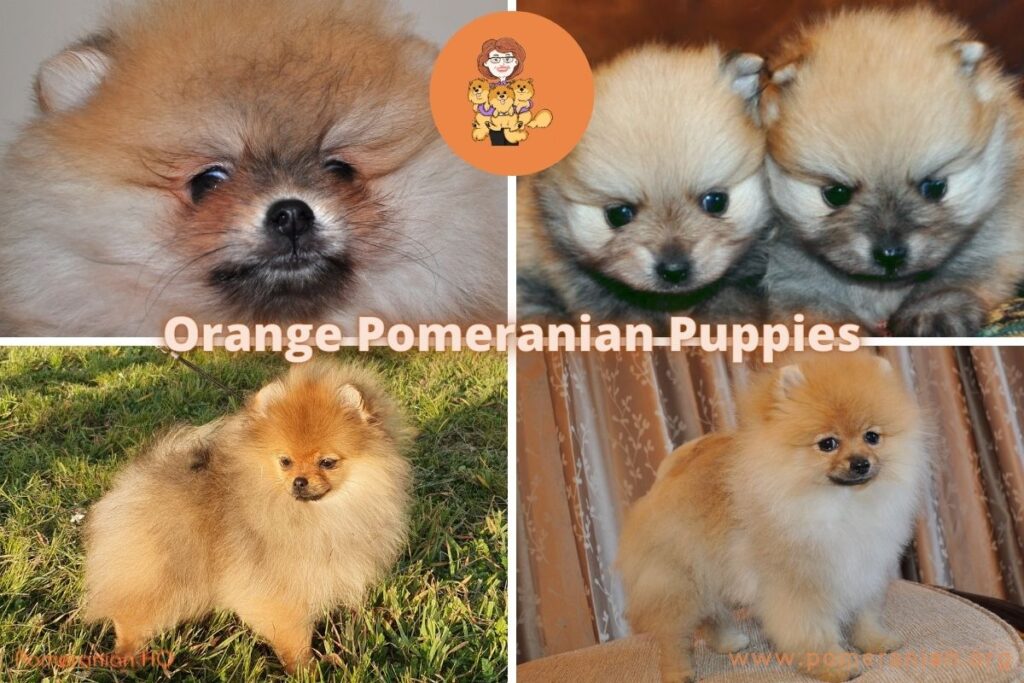
There is more than than i blazon of Orangish Pomeranian canis familiaris. Oranges tin can exist born a sable color, or a light orange Pomeranian, or even appear white as a newborn. An Orange puppy can be born a darkish sable. This pup will ofttimes exist clear to be a lovely orange Pom dog at maturity.
Some other type of orange Pomeranian dog is born very pale and, in some instances, almost as white as a newborn. The glaze color with this type of orange will deepen until, at maturity, this Orangish Pomeranian puppy is also a beautiful orange.
Breed Standards dictate that an Orangish Pom must have black points the same every bit the cherry pom. An adult orange pom (phenotype) can be two genetic types (genotypes). The colour of new Pomeranian puppies volition show the genetic difference.
When an orange Pomeranian puppy is born, he usually has sable pilus and the glaze volition slowly lighten and become an orangish in color as he ages. This type of Pomeranian puppy oft turns out a bright orange color.
If the sable shadings do non fade, equally an adult this would exist a Sable Orange Pomeranian. Pet Pom owners oftentimes refer to Pomeranian colors as tan being really an Orange.
In some cases, he'southward born with no blackness hair, and is a clear bright color at nativity. The cause of this is the puppy beingness homozygous for the orange gene. (Both of the genes at the locus have the allele for the orange "ee.") Homozygous orangish poms tin withal range from beingness equally dark as the reddish setter right through to the palest creamy-orange pom.
The points on the lighter-colored oranges may not exist as dark as the poms with the sable gene. Pet owners often erroneously refer to these colored dogs as tan Pomeranians.
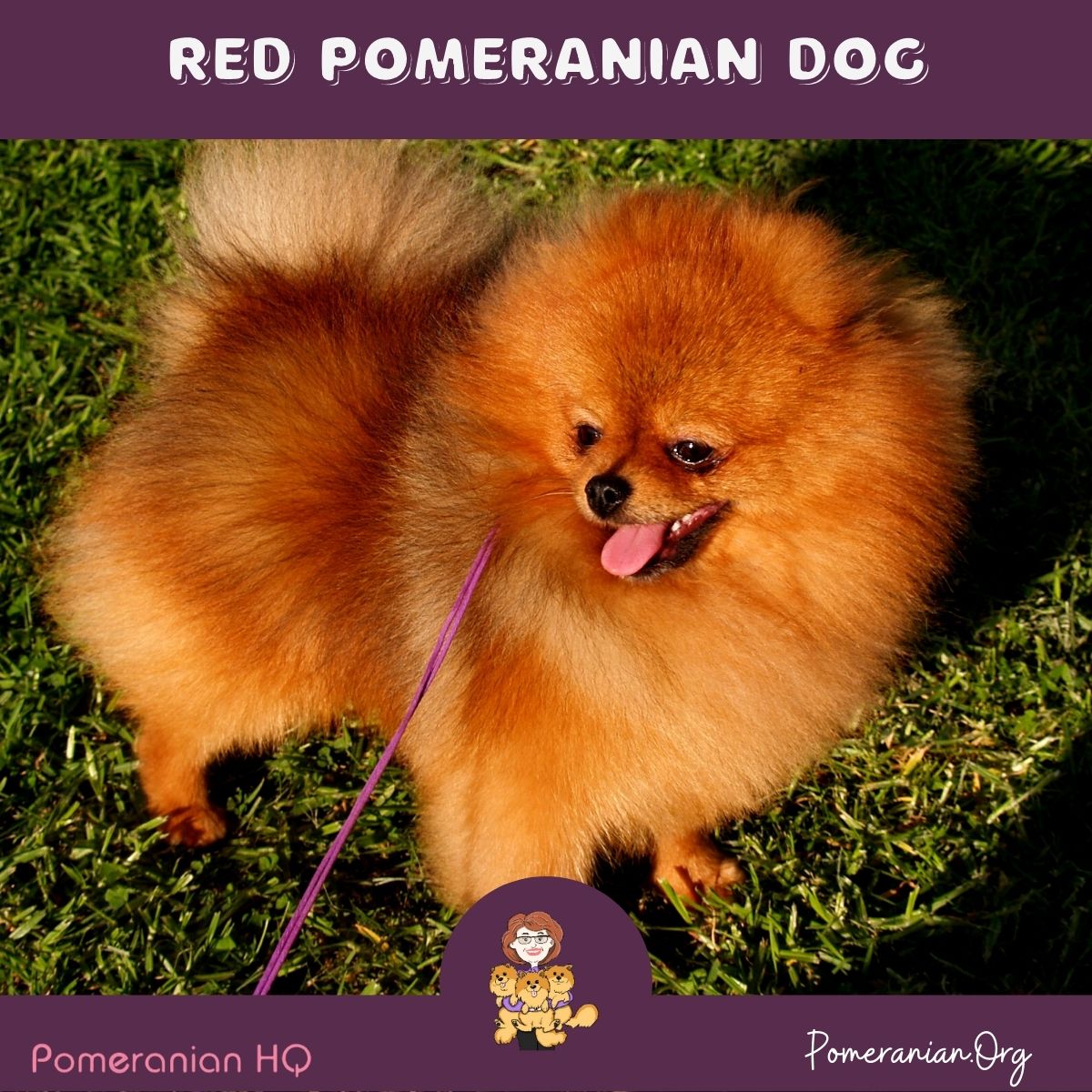
Blood-red Pomeranians
A cherry-red Pomeranian is a deep rusty crimson colour and his points must be blackness.
Pomeranian Color Patterns:
Sable Patterns
Details of sable Pomeranian colors and sable colour Pomeranian photos. A Pomeranian with a sable coat has at least three colors shaded light to nighttime in the glaze. This shading must be as consistent as possible with no areas of self-color.
The term "Sable" is a reference to the darkened bands on a dog's harsh, long guard hairs. Information technology may exist thin, extremely nighttime and heavy, or somewhere in betwixt. The nature of the shade and pattern is another variable, equally is whether any other recessives are present, as they may touch on the strength of the black pigment.
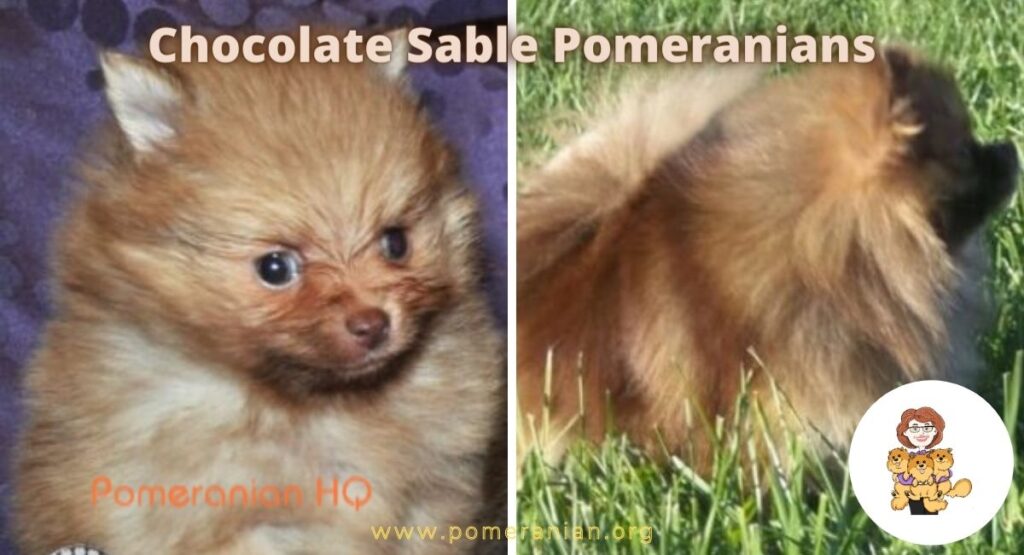
Chocolate Sable
Chocolate sable Pomeranians have a chocolate base coat with darker chocolate guard hairs catastrophe with tipping to the guard hairs.
A chocolate sable is the aforementioned as an orange except for the presence of two copies of a brown (b) cistron (bb). This cistron volition catechumen all of the black paint on a dog'due south trunk to brown (including hand pads, eye rims, and olfactory organ), so everything that might have been black is chocolate-brown instead.
Any orangish on a body will become a warm, coppery brown. In newborn puppies, as with oranges, y'all can be forgiven for thinking they're chocolate & tan until enough time passes and you'll come across the sable bands on his brow and body, not merely solid brown.
Blue Sable
Blue Sable Pomeranians are blue base of operations coats with night blue guard hairs and again end in tipping to the guard hairs. Blue sable occurs when the dilute (d) gene decreases the depth of the existing blackness pigment so it seems similar it has a blue tinge. When the puppies are born, they may seem blue.
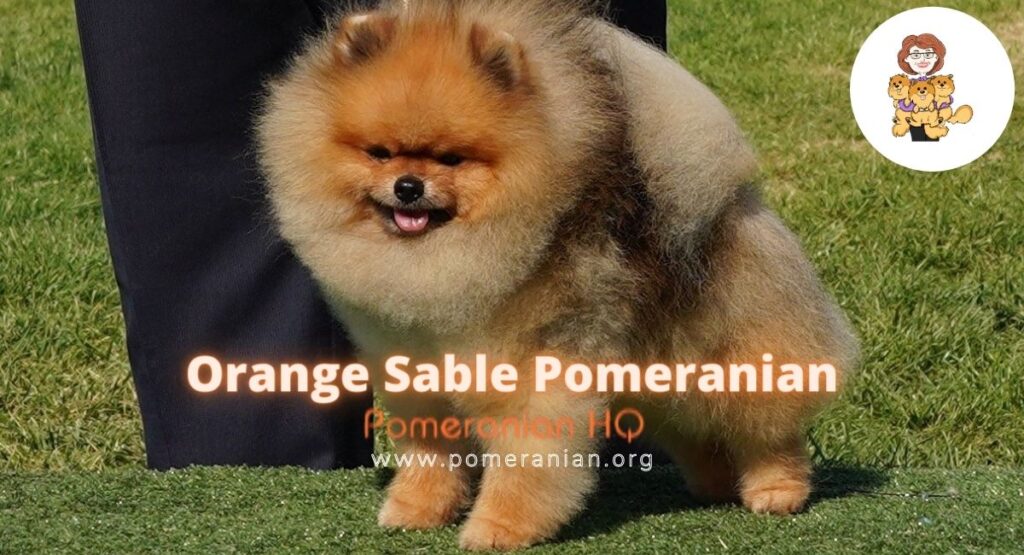
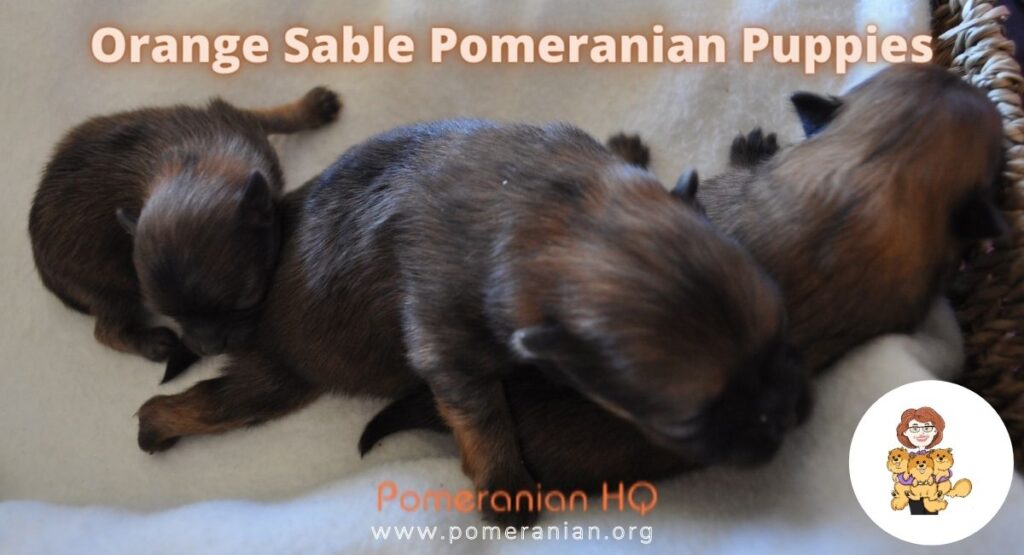
Orange Sable Pomeranians
Have deep orange baby-sit hairs with black tips and the undercoat is cream or low-cal orange in colour. An orange sable Pomeranian puppy is usually very dark at nativity.
Heavy Orange Sable
Heavy sables have a lot of blackness baby-sit hairs covering their torso. Their advent may resemble a black & tan except for the presence of more than orange color on the caput and legs than a genuine blackness & tan.
While they ofttimes have the black & tan and exist a(y)a(t), genetically speaking, they may also have other genes present. Examples include recessive black (a), a saddle sable a(s), or a wolf sable a(w) paired with a(y) or a(s).
Wolf Sable Pomeranians
The wolf sable design is created by the wolf sable a(w) gene; the aforementioned one found in Keeshonds. As with Keeshonds, there should be visible lighter "glasses" effectually the dog'southward optics, proving they're wolf sables, not heavy orange sables.
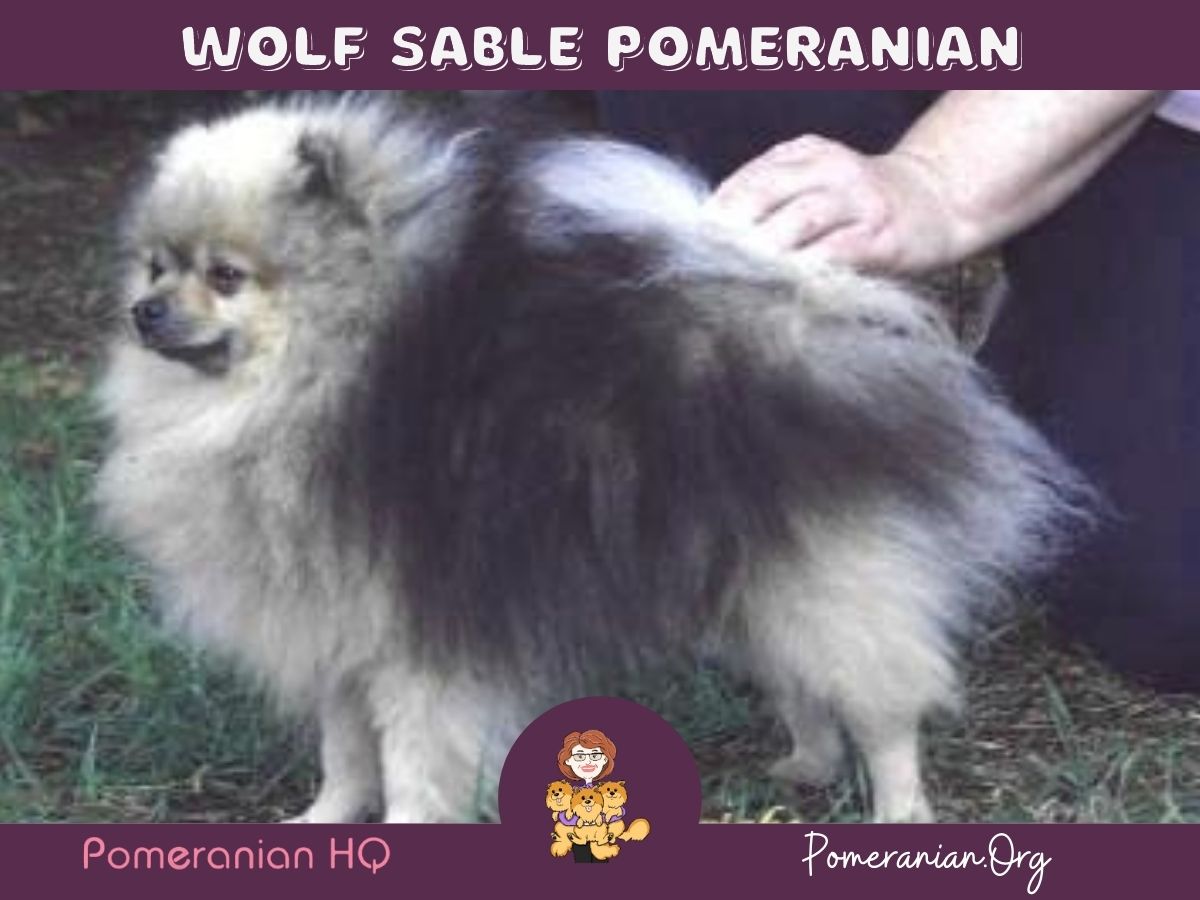
Wolf-colored Pomeranians have a grayness undercoat and the guard pilus is grey with black tipping. The Pomeranian grey undercoat and guard hairs can vary in color from silvery off-white to a low-cal greyness. The wolf sable Pomeranian colors grey-shaded and must not take any hint of orange in his coat.
Beginner breeders sometimes mistakenly annals a gray Pomeranian puppy equally a wolf sable. Orangish sable puppies frequently appear greyer than orange at vi weeks. Notwithstanding, as they mature, the orange comes through.
Experienced breeders know to check backside the ears. The actual color of the pilus backside a puppy's ears is a reasonably authentic guide to the Pomeranian puppy's adult glaze color.
Red Sable Pomeranians
Accept black tips and red hues. The red sable is about the same as an orangish except that a reddish hue replaces the orange base. Usually, the color is that of an Irish gaelic Setter, except for blackness guard hairs (sables).
Cream Sable Pomeranians
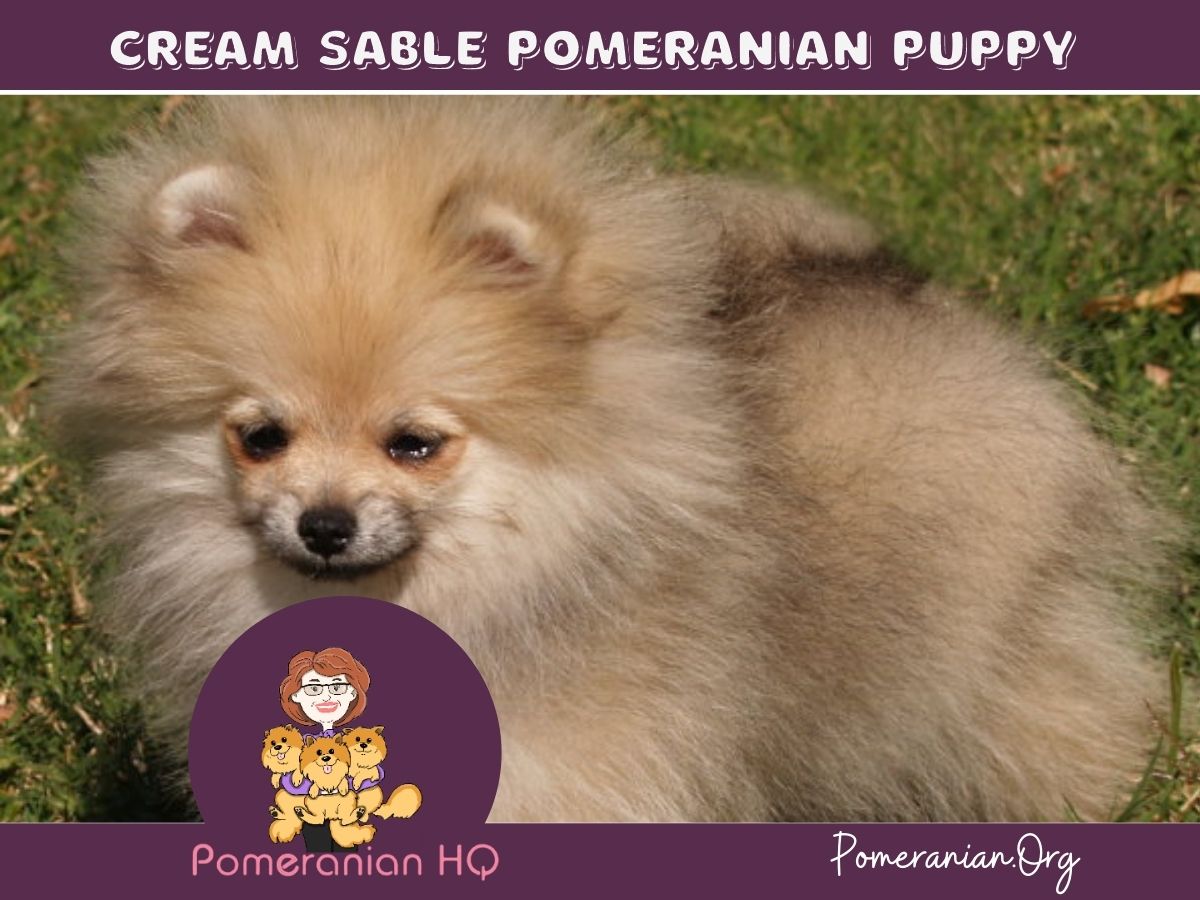
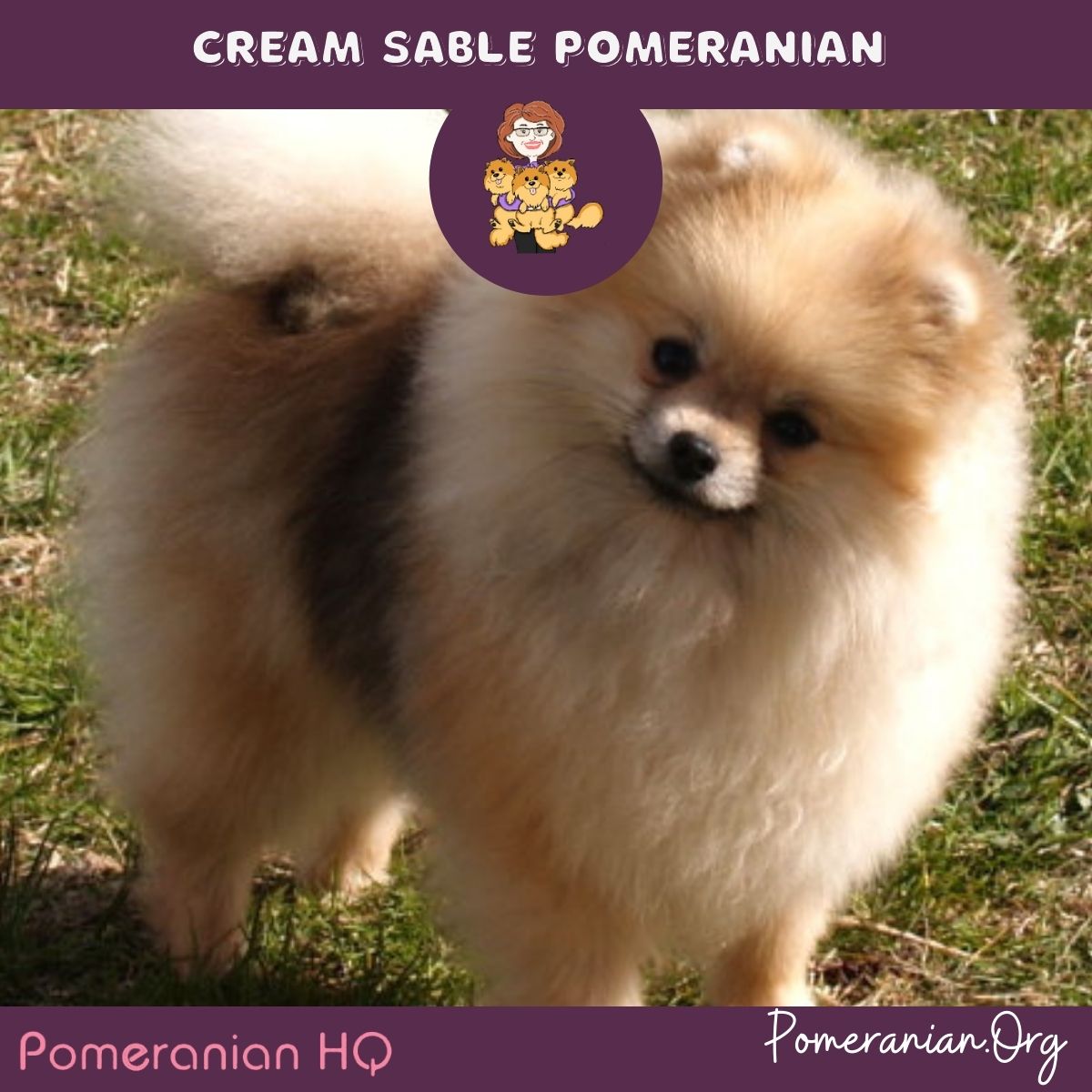
Foam sables are paler than orangish sables every bit they accept blackness sabling.
This color foam is usually a sooty silver as a newborn. The puppy coat is a silvery grey which is and so cream with often some sable tipping to the guard hairs. A cream sable Pomeranian volition have black whiskers and points. When firstborn, the puppies may take a silver color but, when they become adults, information technology becomes a cool cream color.
Tan Points
Pomeranians with tan points appear in iii foundation colors: Blueish and Tan Pomeranians, Brown and Tan Pomeranians, and the Black and Tan Pomeranian.
The three colors share the same tan marking pattern. Any solid colour or allowed pattern with tan or rust sharply divers, appearing in a higher place each eye and on muzzle, throat, and fore chest, on all legs and feet, and below the tail. The richer the tan the more than desirable. Tan markings should be readily visible.
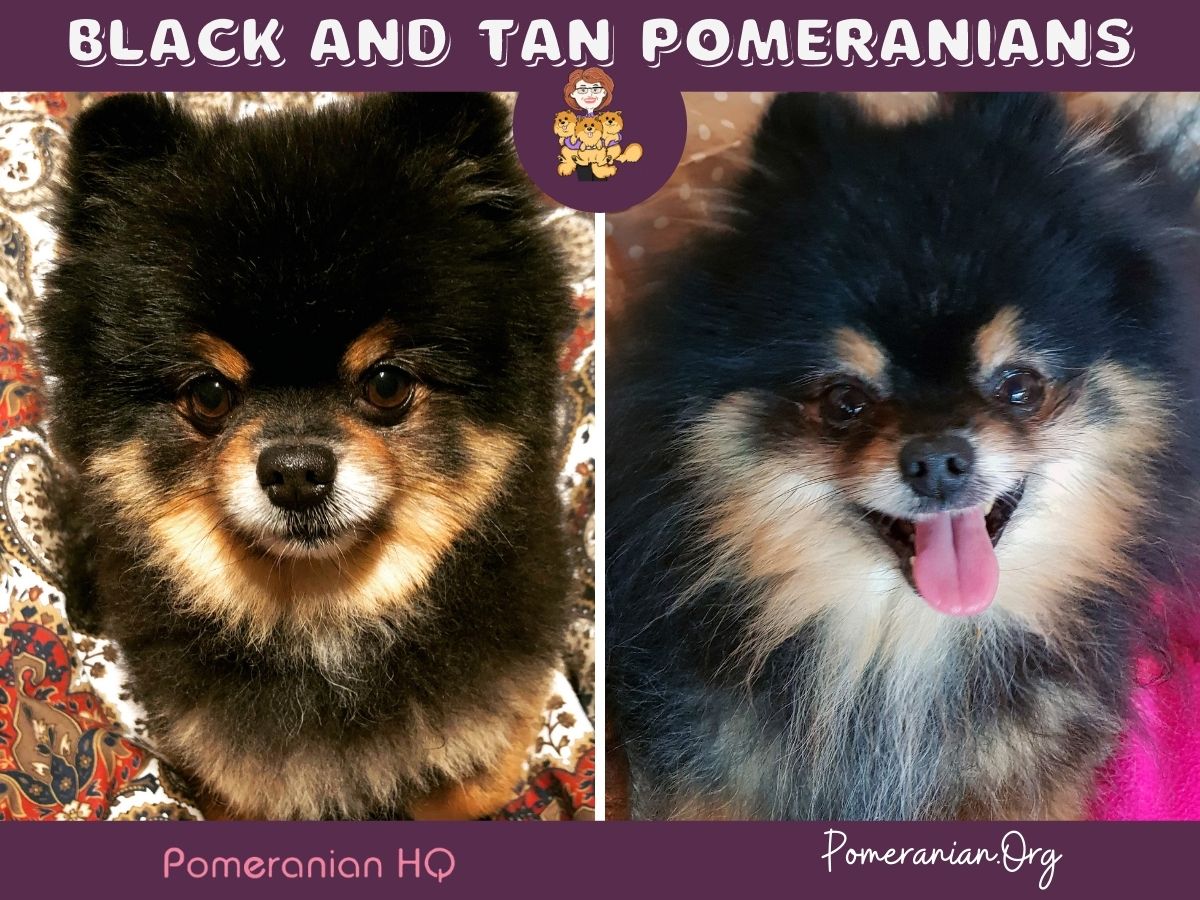
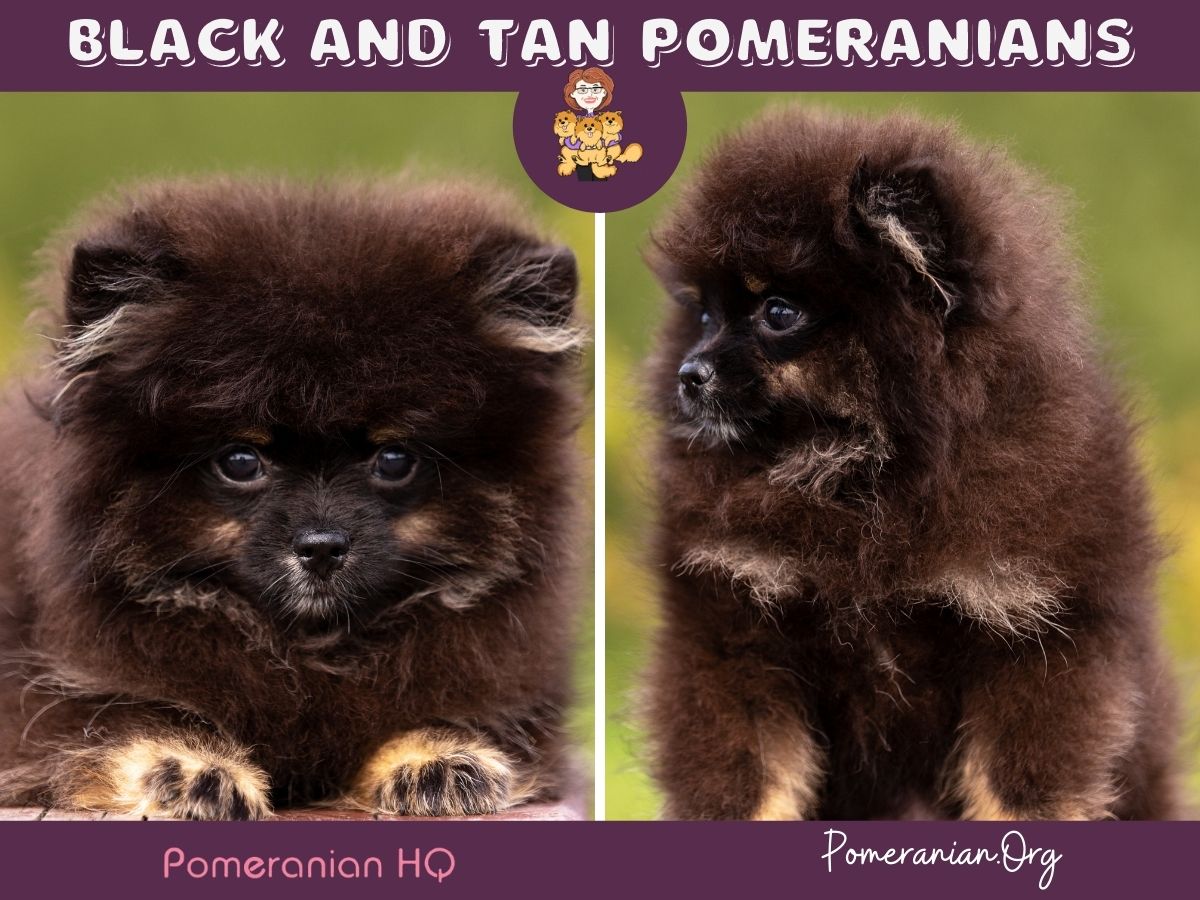
Black and Tan Pomeranian
As the name suggests, these are black-colored Pomeranians with rust or tan markings. The undercoat's base color volition be lighter than the main colour and the points will exist black. If you lot have two dogs of the aforementioned quality, the rusty darker color is the preferred option.
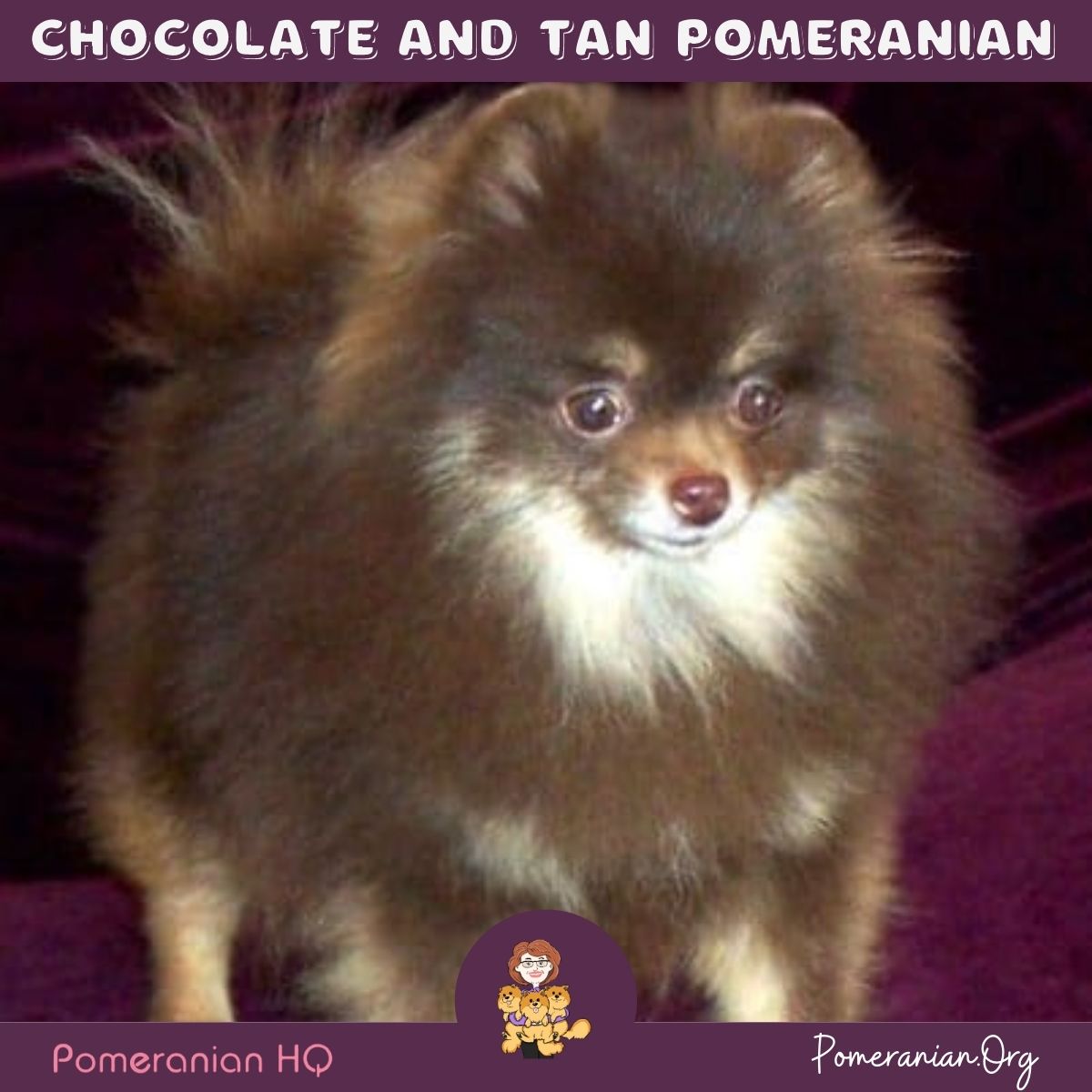
Chocolate-brown & Tan Pomeranians
This is mostly called Chocolate & Tan and it covers all shades from the pale beaver with rust or tan right through to the darkest chocolate. The points will exist brown and the shade will match that of the glaze.
The Blueish & Tan Pomeranian
These poms have rust or tan and bluish color. The points will exist blueish and match the coat's shade.
Brindle Pomeranians
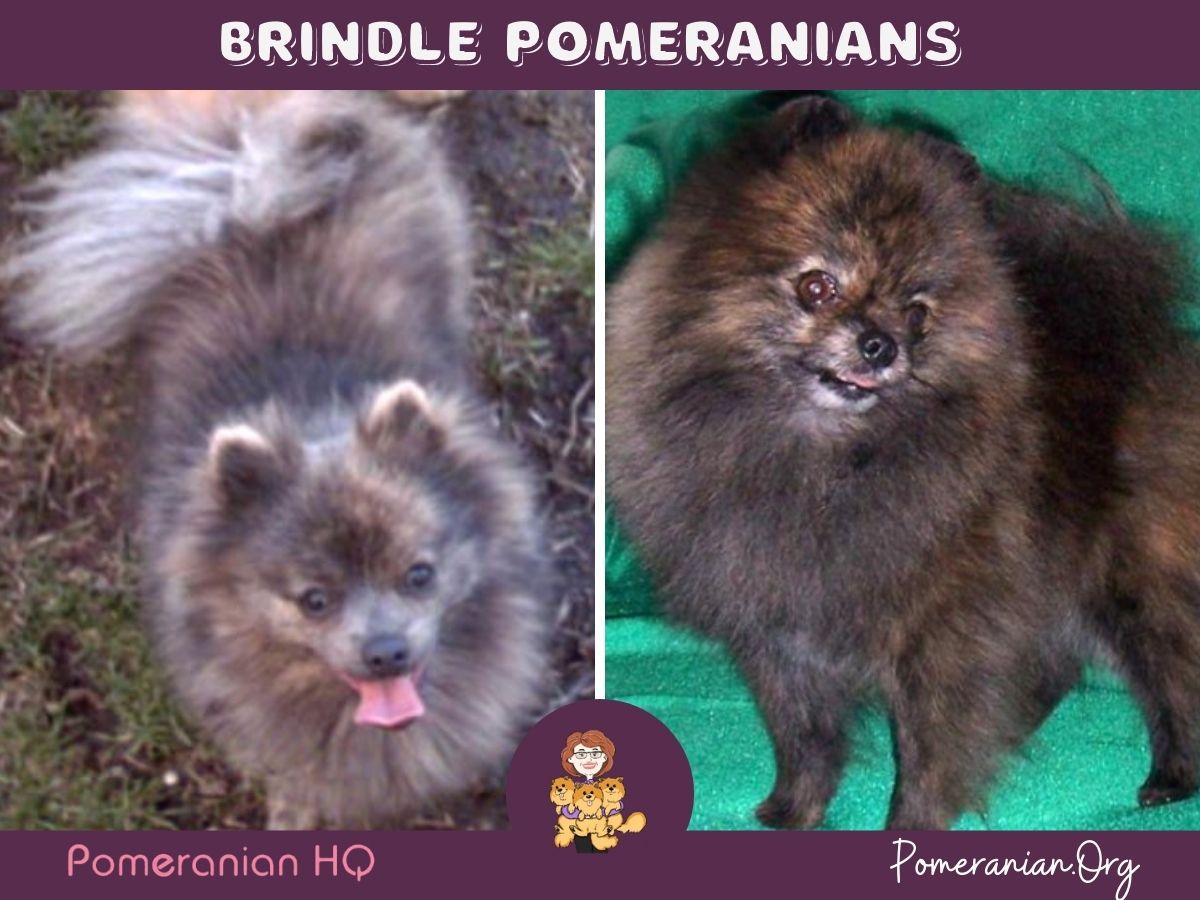
Brindle is a pattern that has a base color and striped overlays. The color of the base can be: ruby, gilt, or orange and the brindle colour is strong blackness stripes. It may also be combined with other patterns on a canis familiaris's coat; for case, blackness and tan or parti.
The points should match the base color. Stripes may be sparse or broad and may simply appear on parts of the dog's trunk or the entire width.
Stripes on adult brindle Pom coats may appear to be broken owing to the length of an developed Pom's coat. Brindles often have an extremely nighttime dorsal stripe.
Brindle Pomeranian Genetics
A striping pattern acquired by K(br), the dominant gene, is known equally Brindle. Boxers routinely accept this particular look, as well every bit diverse other dog breeds. Information technology may be masked by a solid black self-color (K) but it'due south dominant over (k), being non-self-colors.
The striping can sometimes combine with other canine patterns including parti-color, black & tan (although the stripes will only exist visible on the domestic dog's tan sections), and merle. However, the latter generally makes it hard to encounter the merle so it's unwise to blend these two together.
Parti Color Pomeranian
Parti-colour Pomeranians are white with any other color distributed in patches with a white blaze preferred on the head. Markings on the caput should exist symmetrical. Excessive ticking is regarded as a fault.
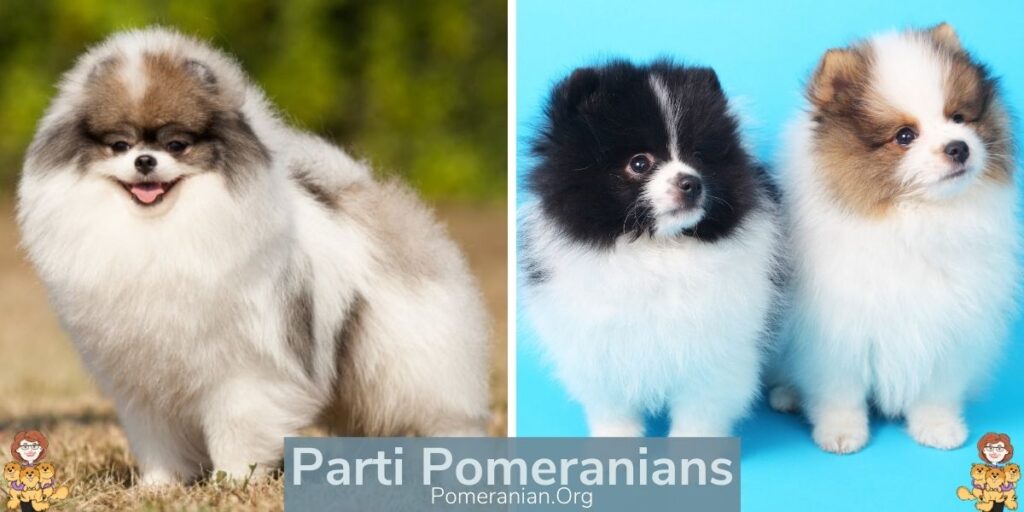
The points on particolored poms should match the color of the patches. This ways black, blood-red, cream, orangish, brindle parti poms, blue and reddish merle, and sable colors should have black points. Blue sable and bluish must take blue points. Brown merle, brown, and beaver must take dark-brown colored points.
Parti-colour is the phrase that describes dogs that have different degrees of white markings. Information technology'due south a recessive gene within the Southward serial, where several variables occur and cause numerous patterns.
White markings may exist involved in base of operations colors or color combinations as well equally other patterns.
This listing will give you some idea of the various options:
- Black & White.
- Blue & White.
- Beaver & White.
- Brindle & White.
- Orangish & White.
- Cream & White.
- Scarlet & White.
- Lavender & White.
Then there are patterns:
- White & Sable Patterns - (wolf, cream, blue, orangish, chocolate and ruby-red sables).
- White & Tan Patterns – (blue, black and chocolate & tan).
Parti-colored Pomeranians seem to be the most intelligent, outgoing, and active members of the Pomeranian dog world. If you accept endemic a parti-color Pomeranian you will never want whatever other color Pom domestic dog to share your life. I probably should have reworded that statement to read; if you have ever been owned by a parti Pom.
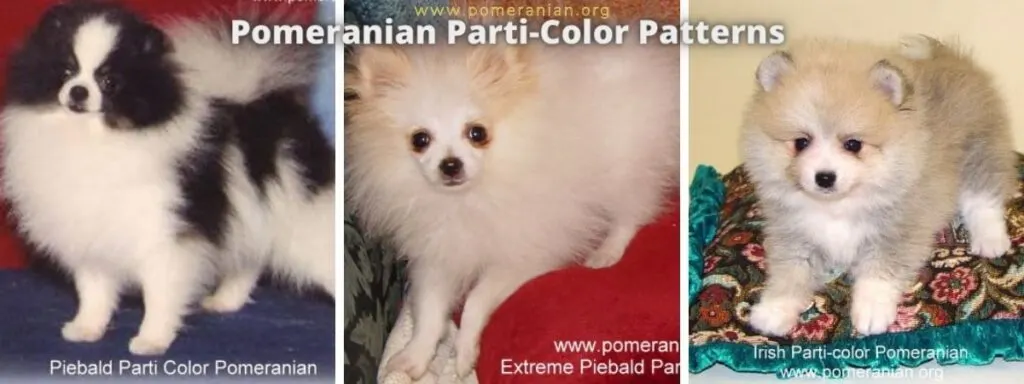
Extreme Piebald Parti Color Pomeranian
White with patches of color on the head and base of the tail.
Piebald Parti Color Pomeranian
The piebald Pomeranian is white with patches of color on the head, body, and base of the tail.
Irish Parti Color Pomeranian
This Pomeranian parti has color on the head and body with white legs, chest, and neckband.
Merle Pomeranian
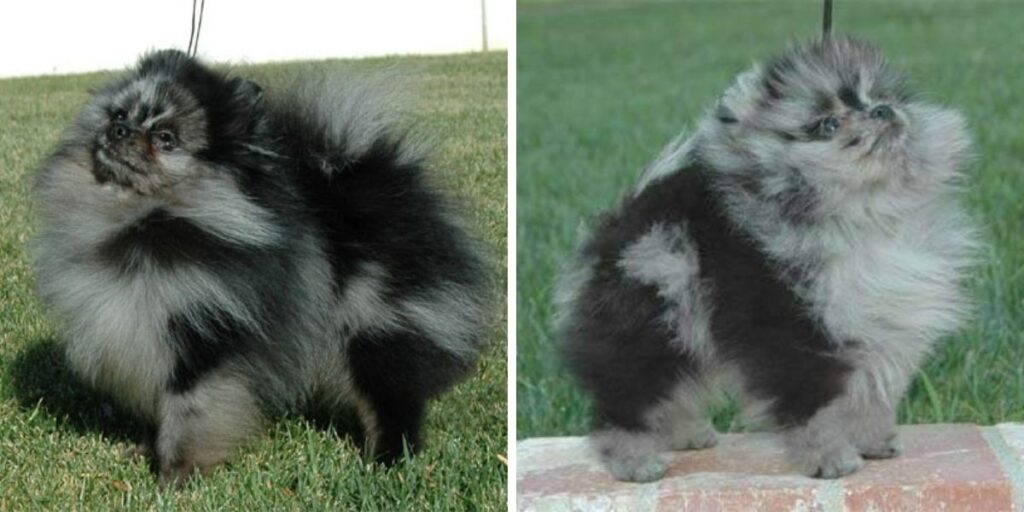
Is actually the typical grayness/black pattern. The blue merle Pomeranian is in reality a black or black and tan with the dilution gene affecting the black glaze regions.
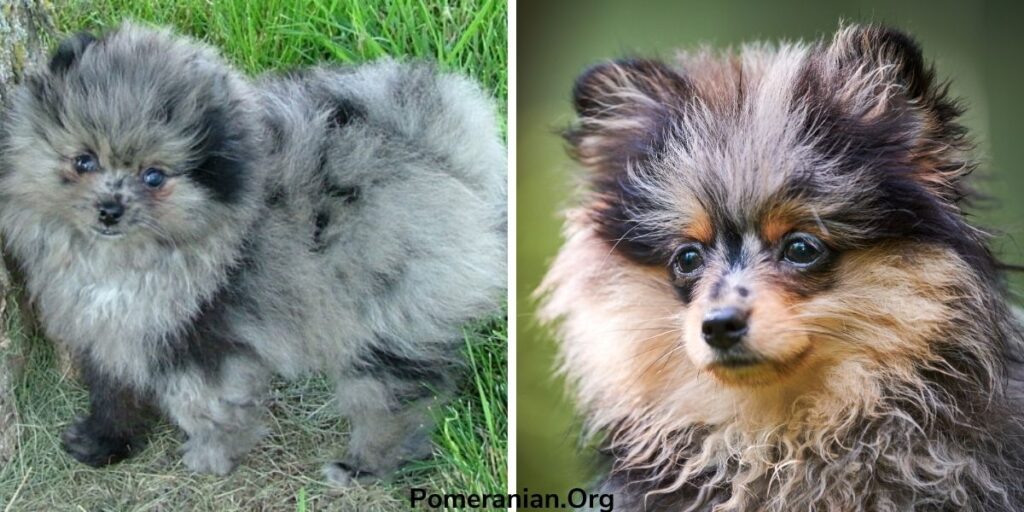
The color of the points in the merle Pomeranians is influenced by the base color e.yard. Orange merles, blue merles should have blackness points.
Beaver, blue, and brown merle Pomeranians should have self-colored points. The Pom Breed Standard does not permit bluish optics.
Dilute Colors
Blue and Dilutes
The black paint tin be diluted to a blueish color by the dilute (d) recessive gene. Any color may be affected only it's when solid blackness is called that the results are most singled-out, transforming it into a variety of blueish shades.
Chocolate is some other pigment that changes quite remarkably into a lavender/isabella.
Other Dilute Colors
The diluted recessive gene tin affect any dog with a blackness paint. So, you may notice dissimilar varieties such equally a diluted sable with blue pigment and hair, instead of the usual blackness.
The other diverseness perchance blue & tan, which is similar to black & tan except that blue replaces black. His footpad, nose, and eye pigment also follow the blue color.
Any Other Commanded Color
& Tan Parti-Colour. A color that is named an "& tan" has the "& tan" pattern and also the particolored pattern (i.e. a tan-pointed parti). E.g. a Tri Colored Blackness & Tan parti color Pomeranian. Again the color of the points should match the color of the particolored coat patches.
Pomeranian Color Classifications:
The Open Classes at specialty shows may be divided by colour as follows: Open Red, Orange, Cream, and Sable; Open Black, Brown, and Bluish; Open Any Other Color, Pattern, or Variation.
ROCS CLASS: (Scarlet, Orange, Foam, Sable)
Due north.B. Sable includes Red Sable, Orange Sable, Foam Sable, Sable, and Wolf Sable.
BBB CLASS: (Blackness, Brown, Blue)
AOAC Course: Beaver, Brindle, Merle, Parti, Tan Points, and White.
Pomeranian Color Chart
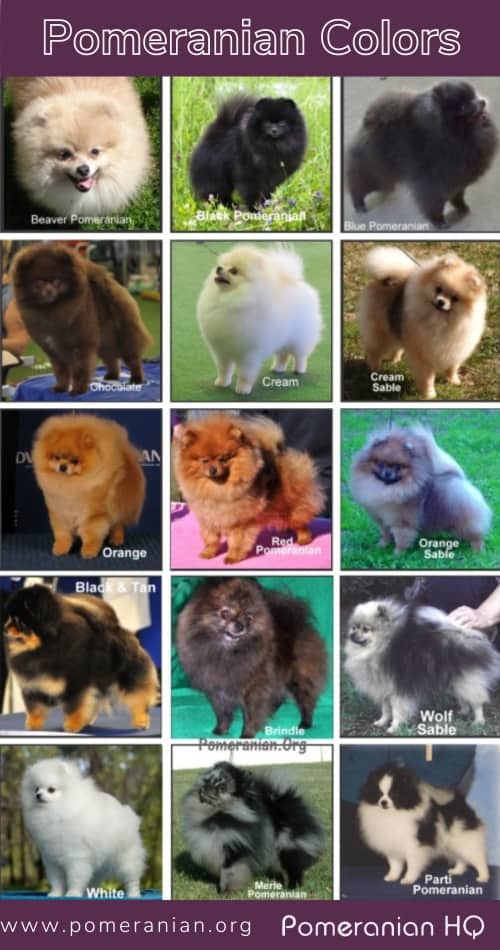
Pomeranian Markings
Pomeranian markings recognized by the AKC:
- Blackness Cage
- Brindle - the base color is gold, reddish, or orangish-brindled with strong black cross stripes
- Parti-color - is white with any other color distributed in patches with a white blaze preferred on the head.
- Black Mask
- White Markings
The AKC ( American Kennel Club ) Pomeranian Breed Standard ( approved July 12th, 2011:
" All colors, patterns and variations thereof are allowed and must be judged on an equal basis."
The U.K. Pomeranian Brood Standard ( updated Apr 2017 :
"All WHOLE colours permissible. In mixed classes where whole coloured and parti coloured Pomeranians compete together, the preference should, if in all other points they are equal, be given to the whole coloured specimens. Merles not permissible."
Pomeranian Nose Color
Pomeranians tin can have blackness noses or be self-colored depending on their glaze color.
Nose - Pigment is black except self-colored in chocolate, beaver and blue.
From the AKC Pomeranian Brood Standard.
Pomeranian Centre Color
Eyes - night, bright, medium sized, and almond shaped; gear up well into the skull with the width between the eyes balancing the other facial features. Eye rims are black, except cocky-colored in chocolate, beaver and bluish.
From the AKC Pomeranian Brood Standard.
Sometimes Pomeranians come in all sorts of colors. Some may have nighttime eyes, merely other eye colors possible in Pomeranians are the hazel eyes of chocolate and beaver Pomeranians.
The color of a dog's eyes can be adamant by its genetic makeup. Some dogs have merle genetics, and these animals often possess blue eyes.
Two different colored eyes tin can be seen in dogs with merle genetics.
Disqualifications: Centre(s) calorie-free blueish, blueish marbled, blueish flecked.
From the AKC Pomeranian Breed Standard.
Pomeranian Colors Determination
Pomeranians will always accept a special place in my heart regardless of their coat color. They capture their possessor'southward hearts with their unique personality and ambrosial demeanor.
I hope you've enjoyed this article and found it informative. If you have whatsoever questions. I encourage yous to drop me a line in the comments or email. I am always happy to answer whatsoever Pomeranian-related questions.
Copyright Pomeranian.org. All Rights Reserved.
List of colors of Pomeranians needed: Pictures of Pomeranian fur colors are required for this Pomeranian website. Many Pomeranian different colors are still needed to complete this article. If you are able to provide any of the rare colored Pomeranian pictures please contact us via the site contact class.
Pom colors required are examples of bluish & tans, lilac Pomeranian, chocolate and tans, blues, blue sables, another adult merle, scarlet sables, parti Pomeranian, irish gaelic parti-colour, and some of the rare Pomeranian colors are required. Dogs and owners will be acknowledged as required.
A big thanks to all those who accept helped with this didactics projection on Pomeranian glaze colors.
References and Further Reading:
[one] Official Standard of the Pomeranian (AKC). American Kennel Club, 2011.
[2] English Kennel Club Pomeranian Breed Standard, 2017.
[3] Denise Leo, The Pomeranian Handbook.
[iv] Milo Chiliad. Denlinger "The Complete Pomeranian".
[5] Kimbering Pomeranians "1891-1991".
[6] William Taplin "The Sportsman'south Cabinet".
[7] Eastward. Parker "The Popular Pomeranian".
[8] Lilla Ives "Show Pomeranians".
Larn All About Pomeranians in The Pomeranian Handbook
Source: https://pomeranian.org/pomeranian-colors/
Posted by: criglerancestright.blogspot.com
0 Response to "What Is The Type Of Makeup On The Atrians That Makes Those Markings"
Post a Comment